2040 VISION
The City That Produces — A Vision of 2040
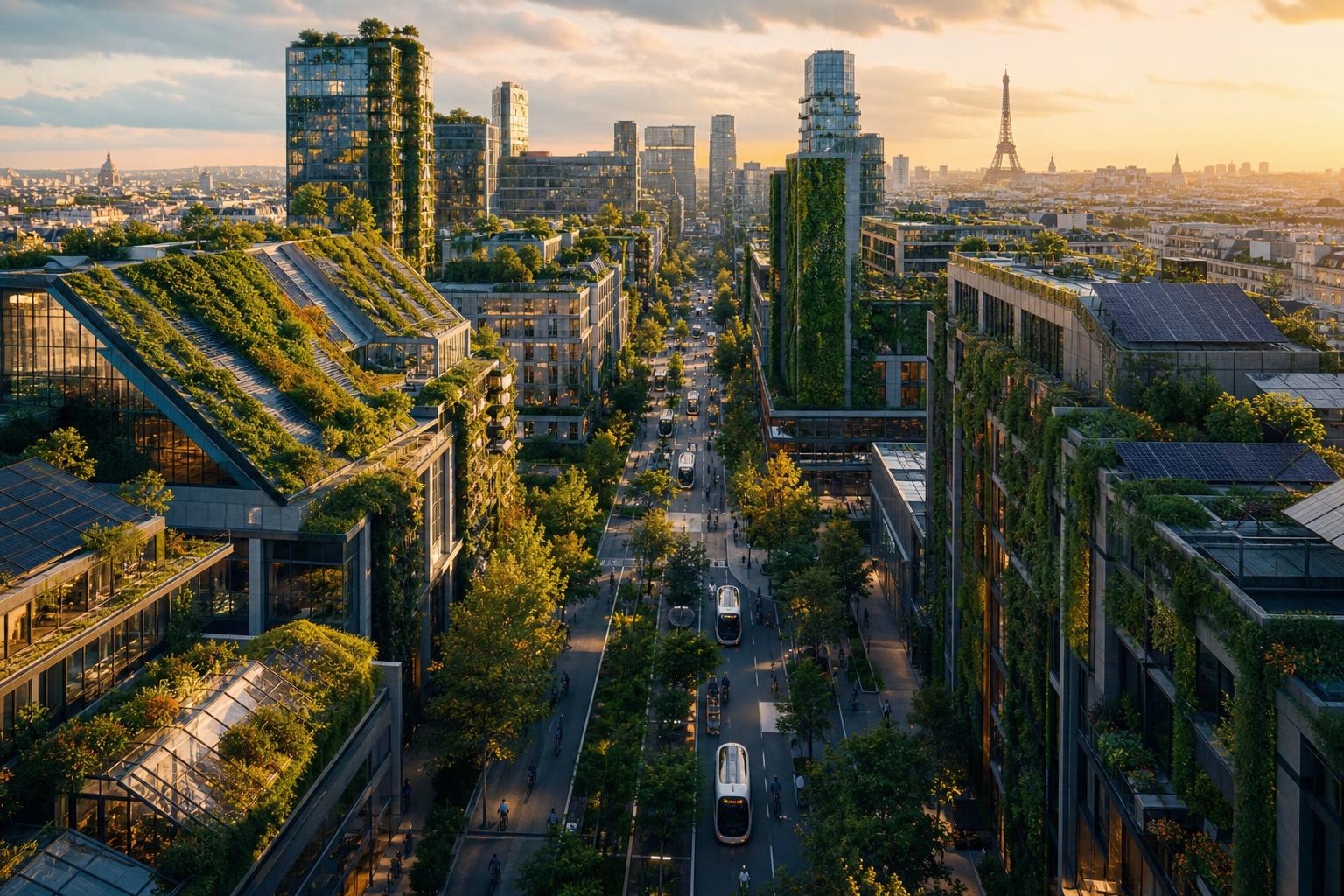
This is not a forecast. It is a memory sent backwards from a city that already works. Walk with us through the productive city of 2040 — and notice how little of it would make sense to someone standing in 2025.
Horizon 01 · 2025
The Last Old City
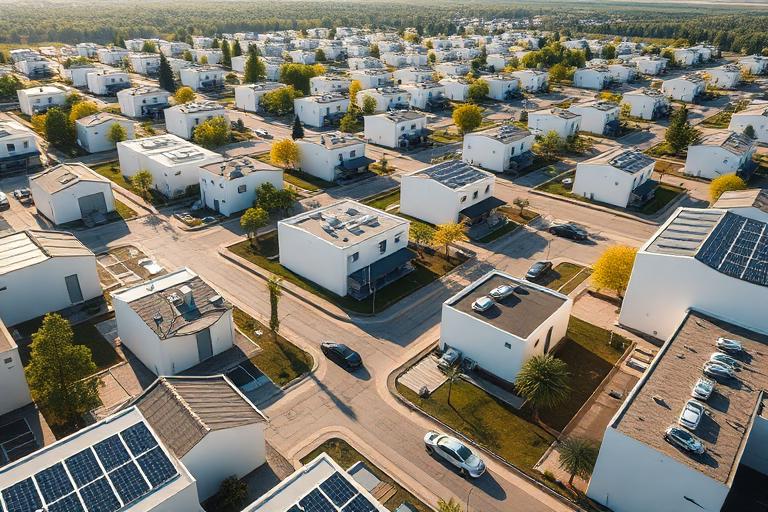
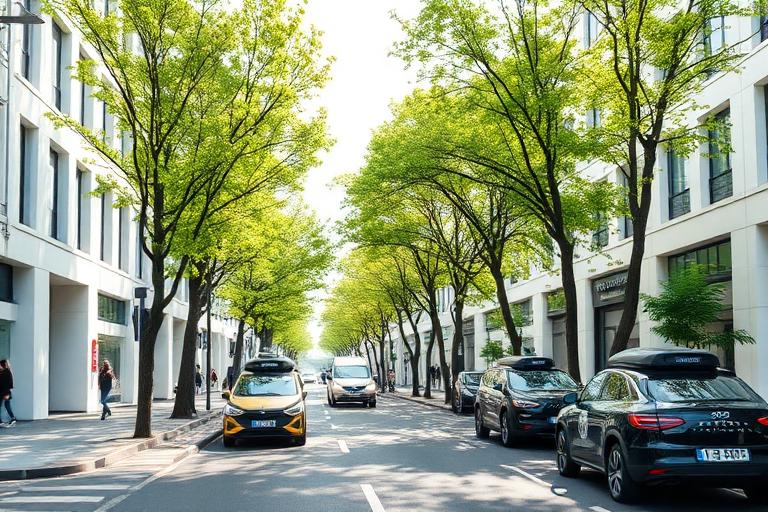
Begin where we are. In 2025 the city is a machine for consuming. It imports its energy, exports its waste, and devotes its single most valuable resource — land — to storing stationary metal.
Rooftops sit empty. Parking lots bake in the sun. Rain is treated as a threat to be flushed away as fast as possible. Every street is designed around a private driver who, statistically, is parked 95% of the time.
We will look back on this the way we now look back on cities that had no sewers: not evil, just unfinished. The productive city does not begin with a new technology. It begins with a refusal — a refusal to accept that the city we inherited is the city we must keep.
“We will look back on the city of 2025 the way we now look back on cities that had no sewers — not evil, just unfinished.”
Horizon 02 · 2030
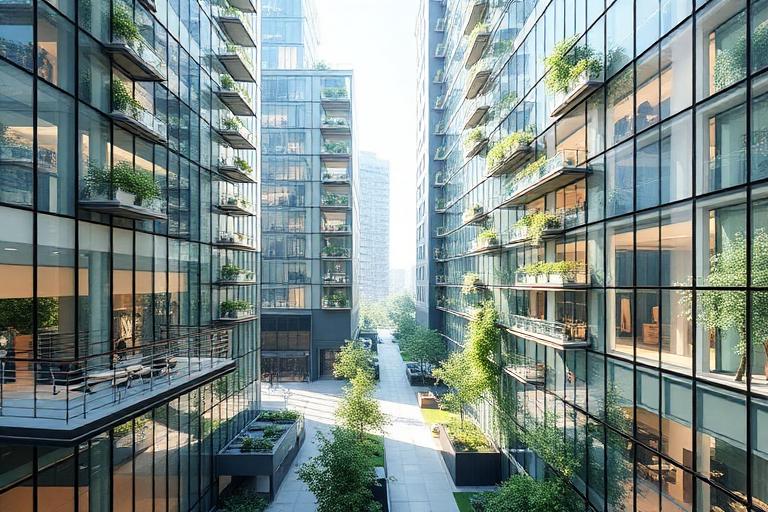
The Quiet Revolution
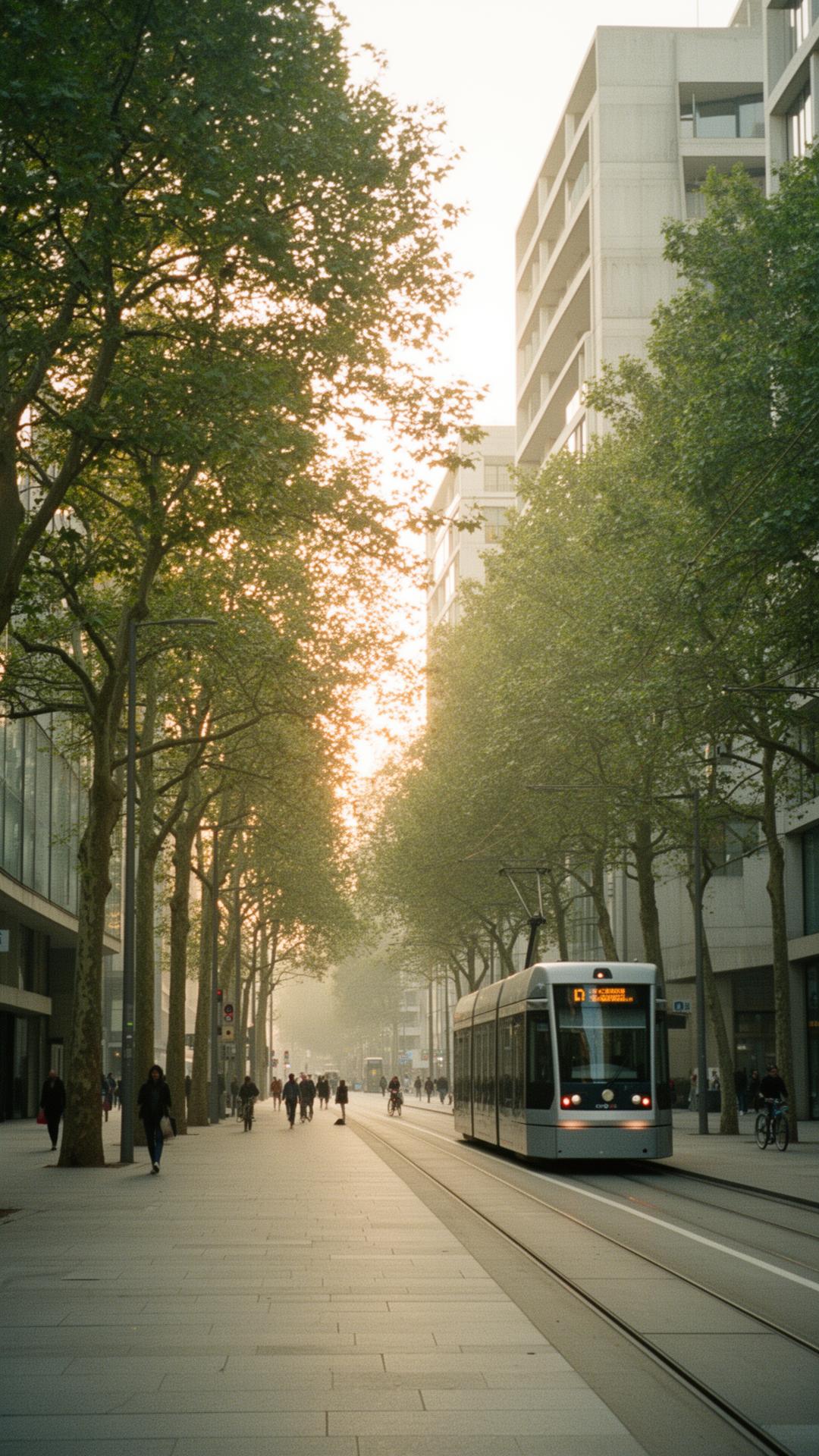
The first change is one you hear before you see it: the city goes quiet. Combustion engines thin out, then vanish from the centre.
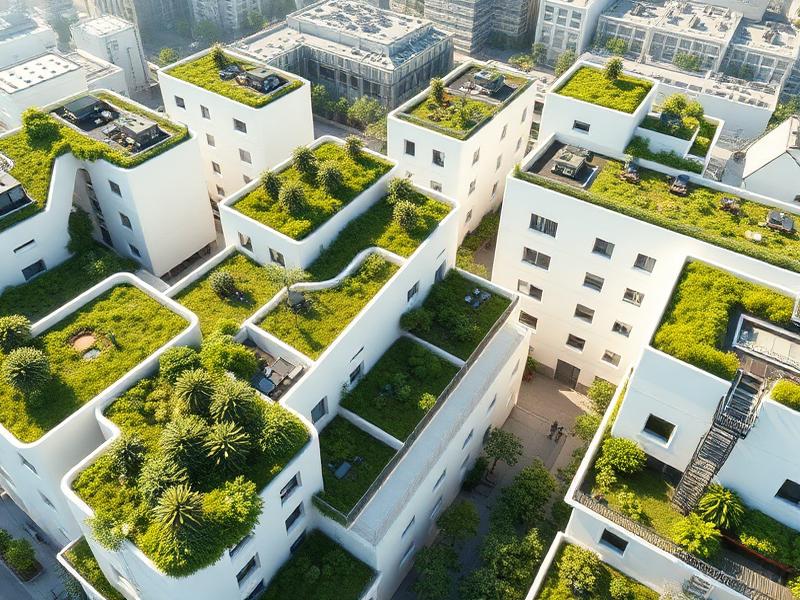
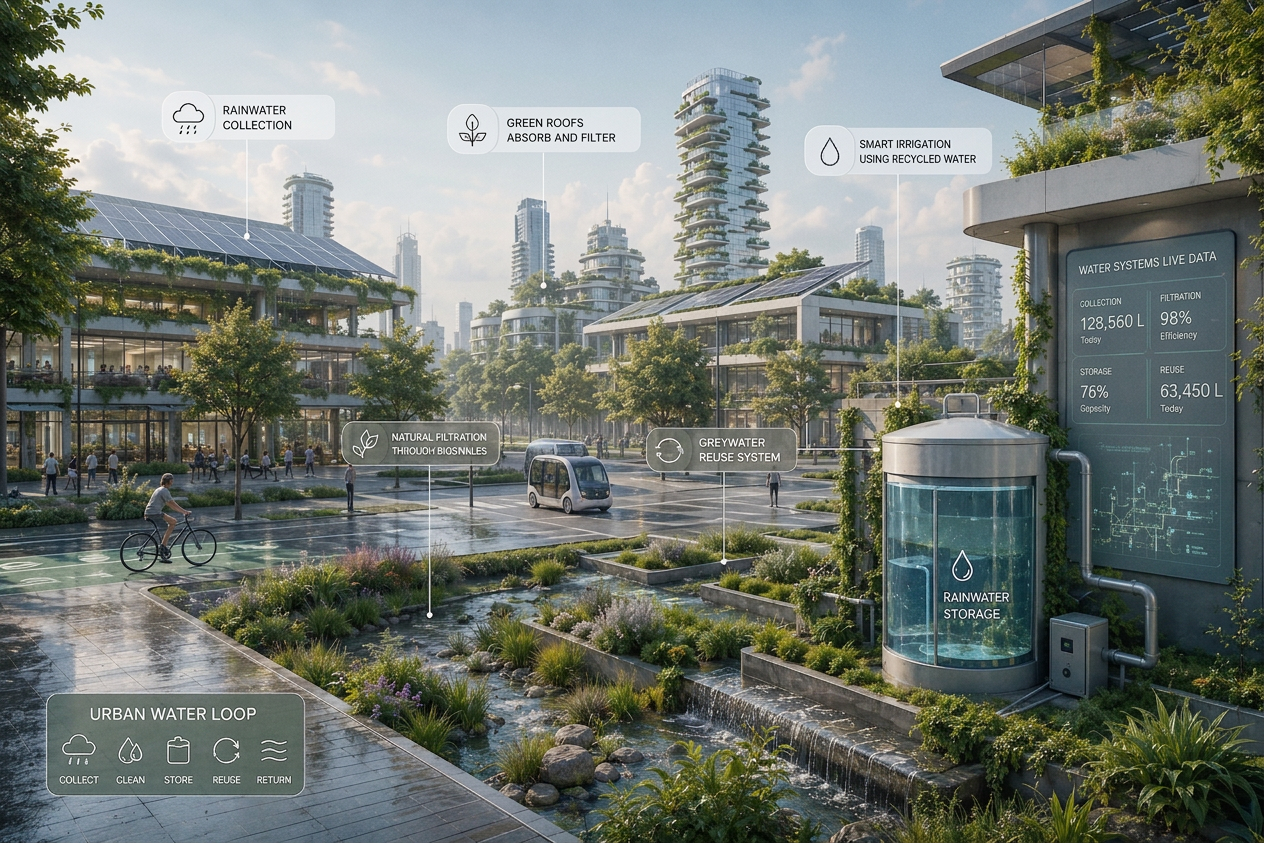
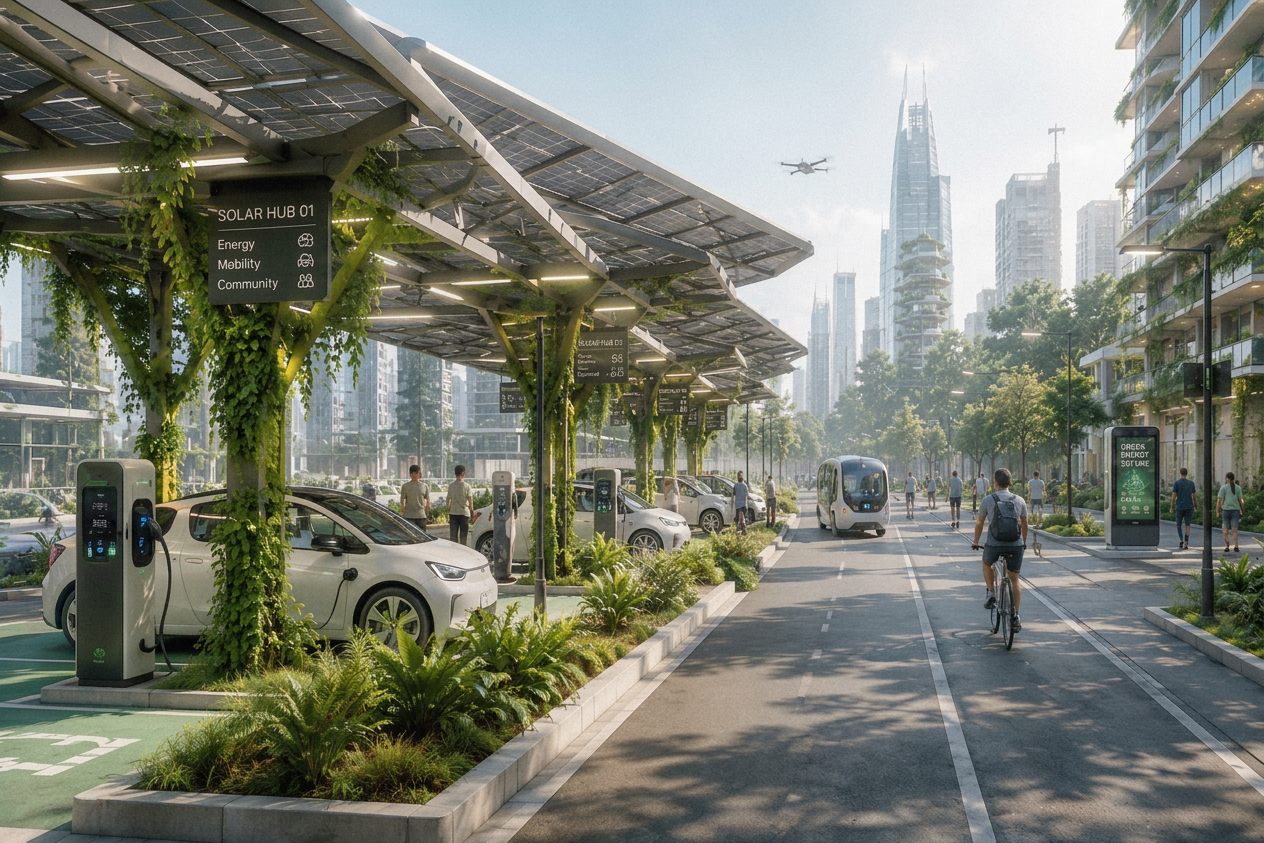
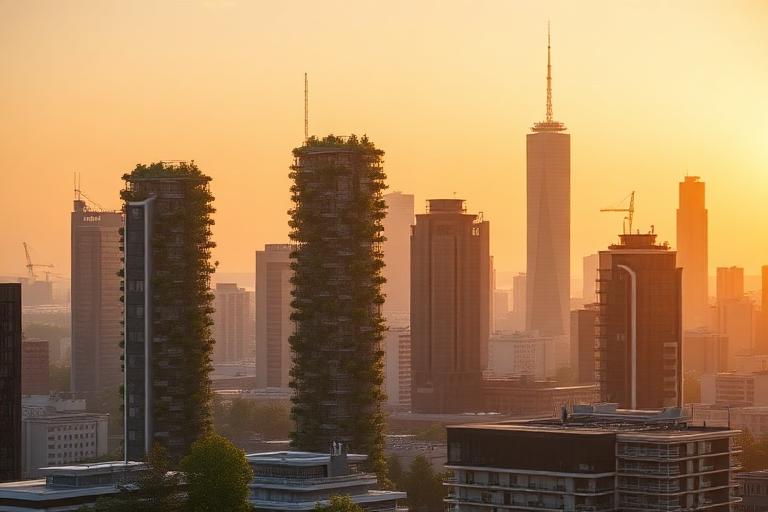
The surfaces are the next to change. Roofs and parking lots — the two largest neglected surfaces in any city — quietly become power plants. The asphalt that used to radiate heat now sits in the shade of solar canopies; the rooftops that did one job now do three. Rainwater is no longer flushed away; it is caught, slowed and put to work.
None of this requires tearing the city down. The 2030 city is the same city as 2025 — the same streets, the same buildings — but every surface has been given a second job. We stopped building new things and started asking the things we already had to do more. That, more than any single invention, is the revolution. And it was quiet, because the best infrastructure always is.
Horizon 03 · 2035
The End of the Driver
By 2035 the steering wheel is a museum object. The driving licence — that rite of passage, that plastic card a whole century organised itself around — simply stops being issued, because there is nothing left to license.
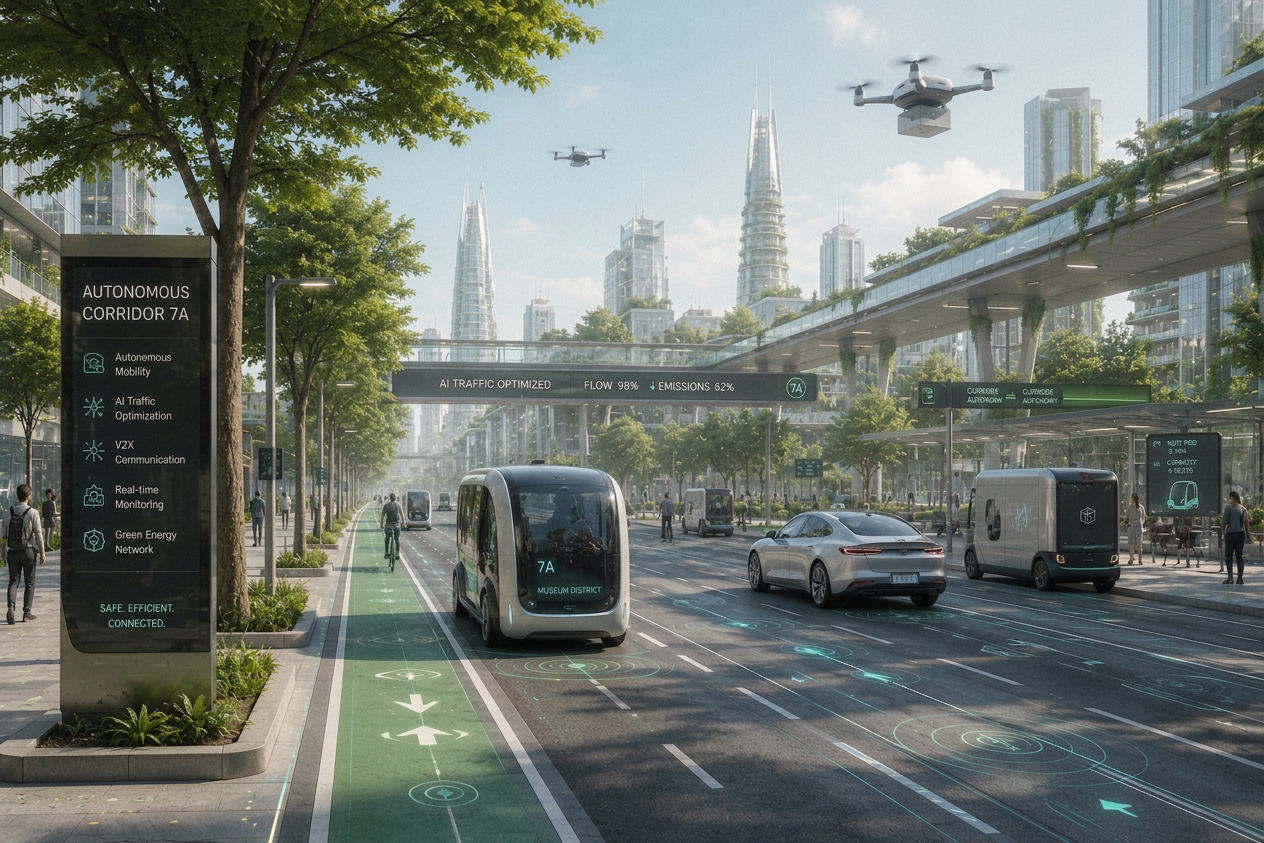
Autonomous vehicles do not just drive; they dissolve the entire logic of the old street. Cars no longer need to be owned, because they no longer sit idle — they circulate, summoned and released, a fleet that breathes with the city's rhythm.
And once the cars stop needing to be stored, the parking lot — that vast, sun-baked apology for urban planning — is suddenly free. Half the asphalt in the city becomes available overnight. Some of it returns to soil and trees. Some becomes housing. Some keeps its canopies and stays a power plant, now without a single car beneath it.
The child born in 2035 will never learn to parallel park. They will find it as strange as we find the idea of stabling a horse in the city centre.
“The child born in 2035 will never learn to parallel park — and will find it as strange as we find stabling a horse downtown.”
Horizon 04 · 2040
The City Lifts Off
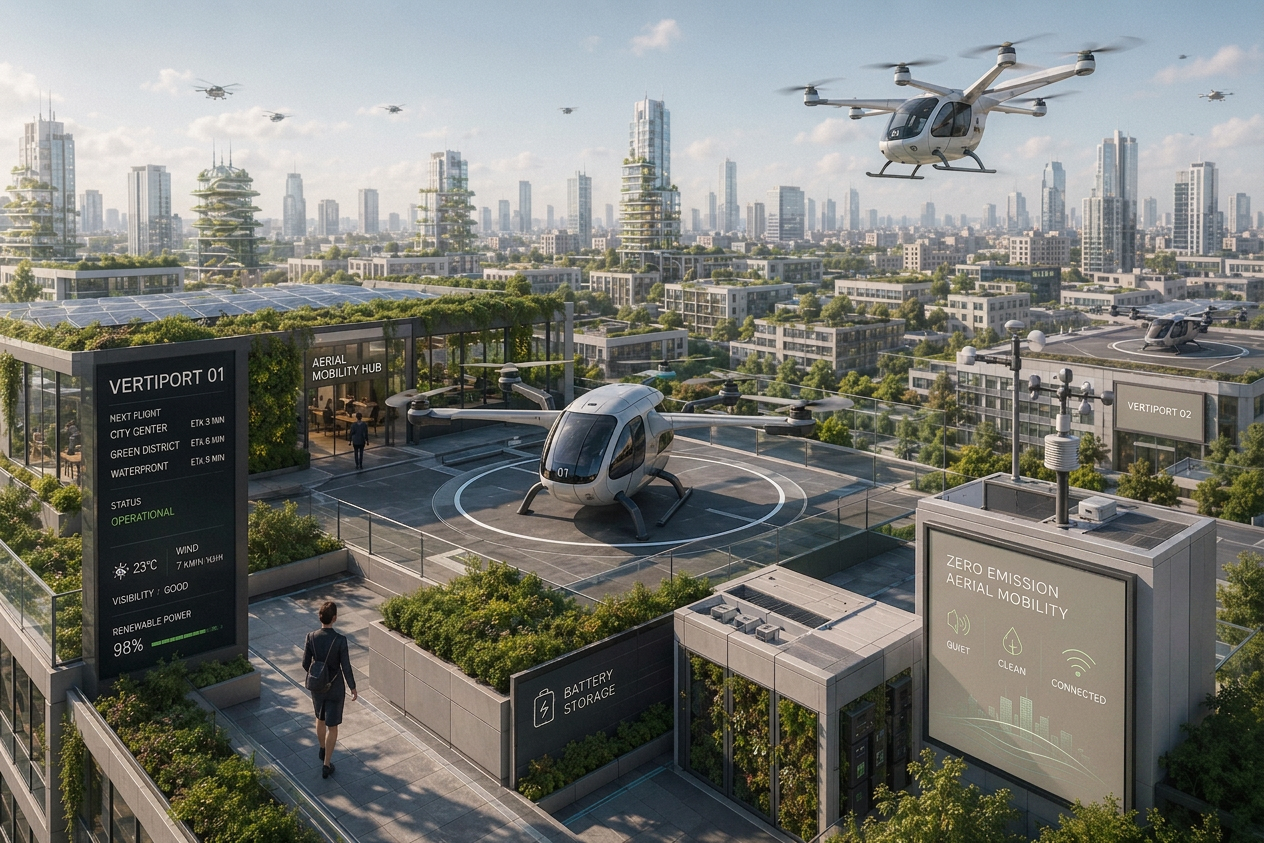
With the ground freed, the city discovers it has a third dimension. The sky — empty for the whole history of cities except for birds and the occasional helicopter — opens up. Electric aircraft lift and land without a runway, threading between towers on corridors no human eye can see but every machine agrees on.
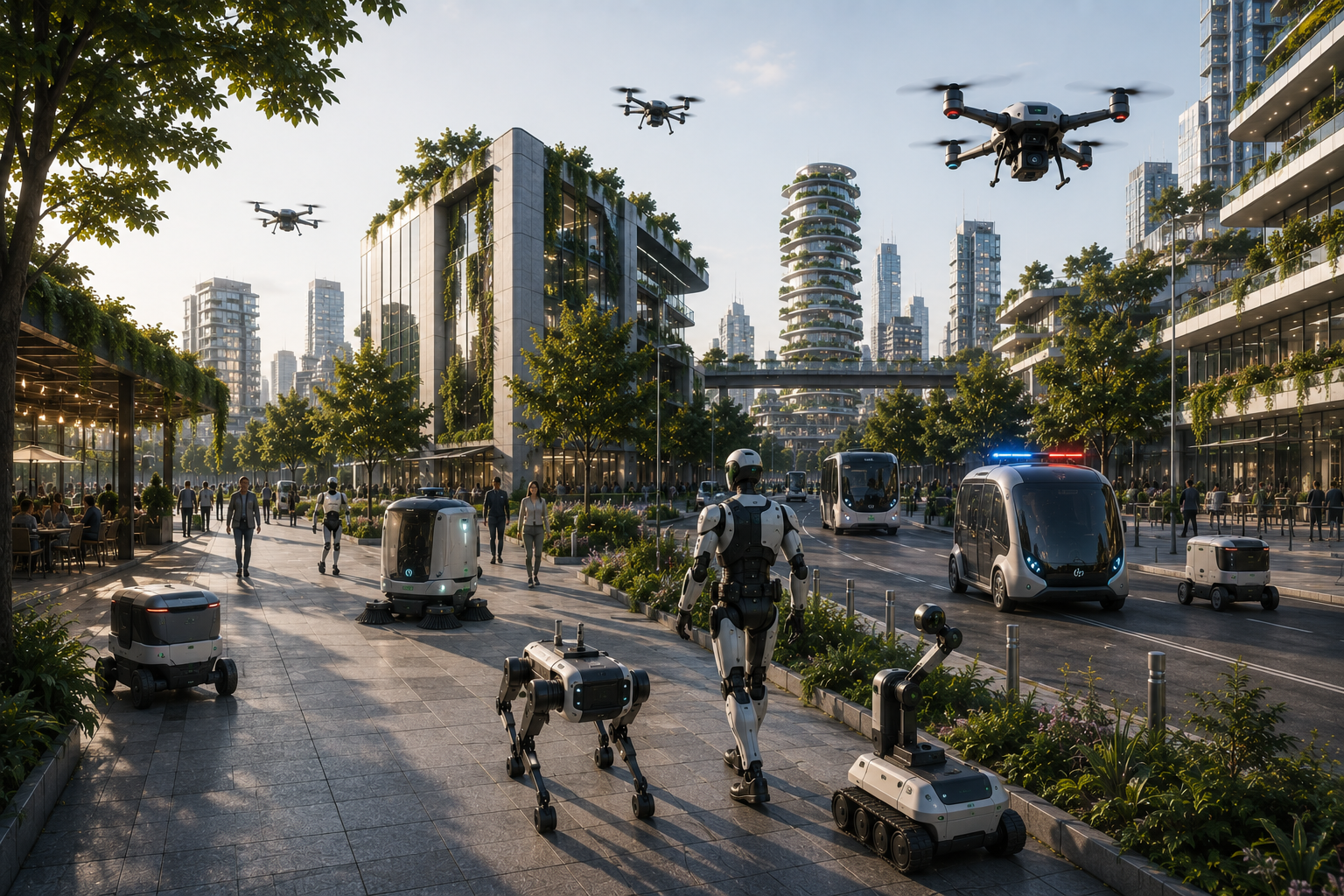
A medical sample crosses the city in four minutes. A surgeon in one district operates through a machine in another. Goods stop travelling in two-ton boxes and start arriving in objects sized to the task — small, electric, quiet, often airborne.
The rooftop, already a power plant and a garden, becomes a port. The vertiport is not a glamorous airport in the sky; it is as ordinary as a bus stop, woven into the same buildings that generate the energy the aircraft run on.
The city has stopped being a flat thing you move across and become a volume you move through.
2040 VISION
The Things We Can't Yet Imagine
Here is the honest part. Everything above is the predictable future — the part we can already see the shape of. The real 2040 will be stranger, because the most important changes are always the ones no one forecasts.
Consider: when the city itself produces, balances and trades its own energy, water and mobility in real time, it stops being a passive backdrop and becomes something closer to a living system — one that senses, anticipates and responds.
A building that knows a storm is coming and fills its cisterns the night before. A district that notices a heatwave and pools its shade and its stored power to protect its most vulnerable streets, without anyone issuing a command. Neighbourhoods that trade surplus energy the way households once lent each other a cup of sugar.
We do not have the words for what a city becomes when every surface is productive and every system can talk to every other one — just as someone in 1900 had no word for “smartphone,” only “telephone you carry.”
The productive city is not a destination. It is the moment the city stops being a thing we maintain and becomes a partner we live with. That is the future worth building. And the strangest, best parts of it have not been invented yet.
“Someone in 1900 had no word for “smartphone” — only “telephone you carry.” We have no word yet for what the city becomes when every surface produces.”
We are building this now.
The 2040 city is not waiting for permission or for some final invention. It is being assembled today, one productive surface at a time. Explore how — through our concepts, our case studies and the ventures already turning this vision into infrastructure.