Back to home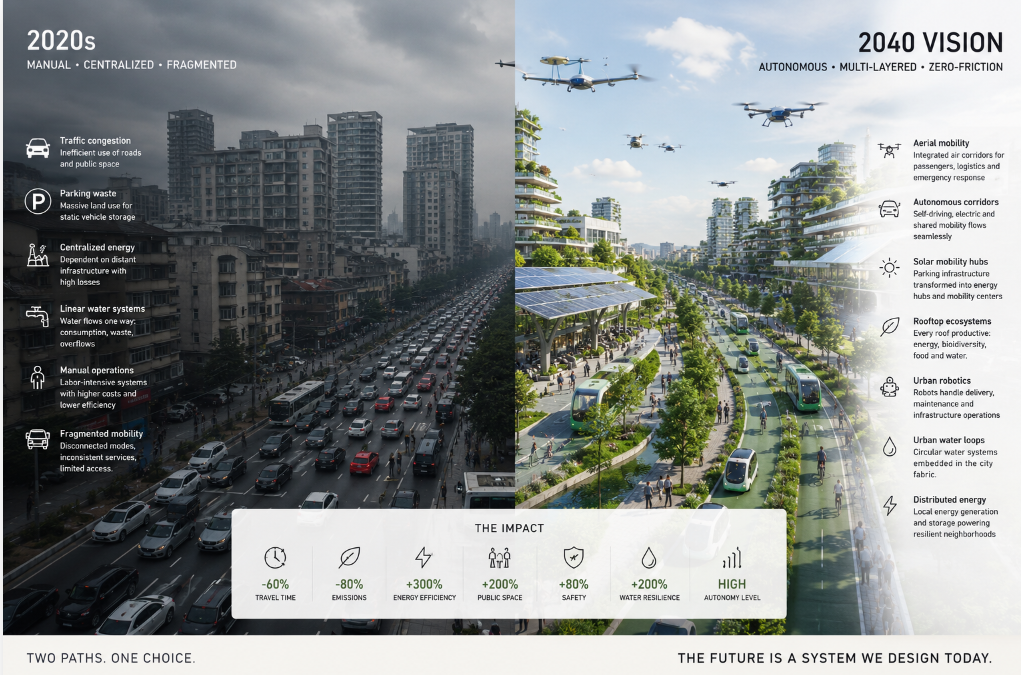
CONCEPTS
The concepts shaping the productive city
Six converging urban systems that turn streets, rooftops, vehicles and water into active infrastructure — the foundations of energy-positive districts, autonomous mobility and AI-driven urban services.
Explore the six conceptsTHE THESIS
Cities must produce, not just consume.
For a century, urban design has optimised consumption: streets that store cars, roofs that shed rain, grids that import power from somewhere else. The cities of 2040 will not be able to afford that posture. Climate volatility, electrification and AI-managed infrastructure are pushing every urban surface toward a productive role.
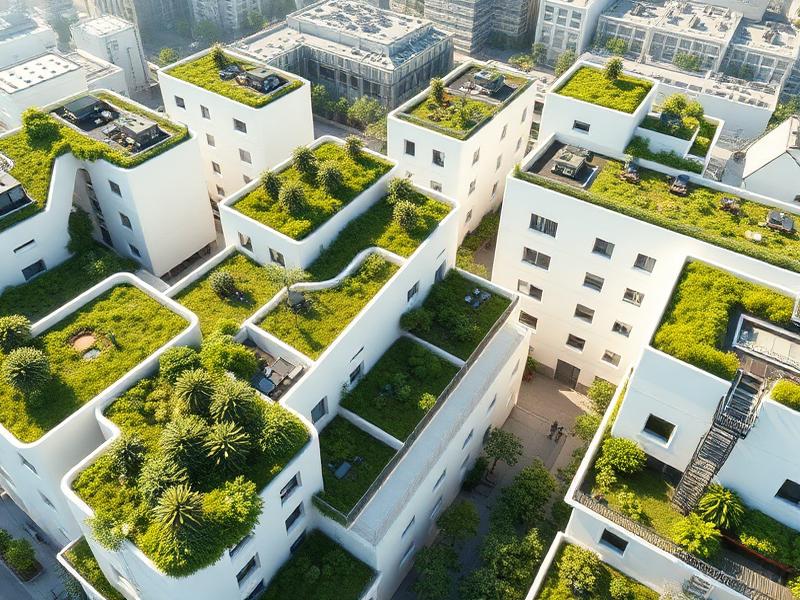
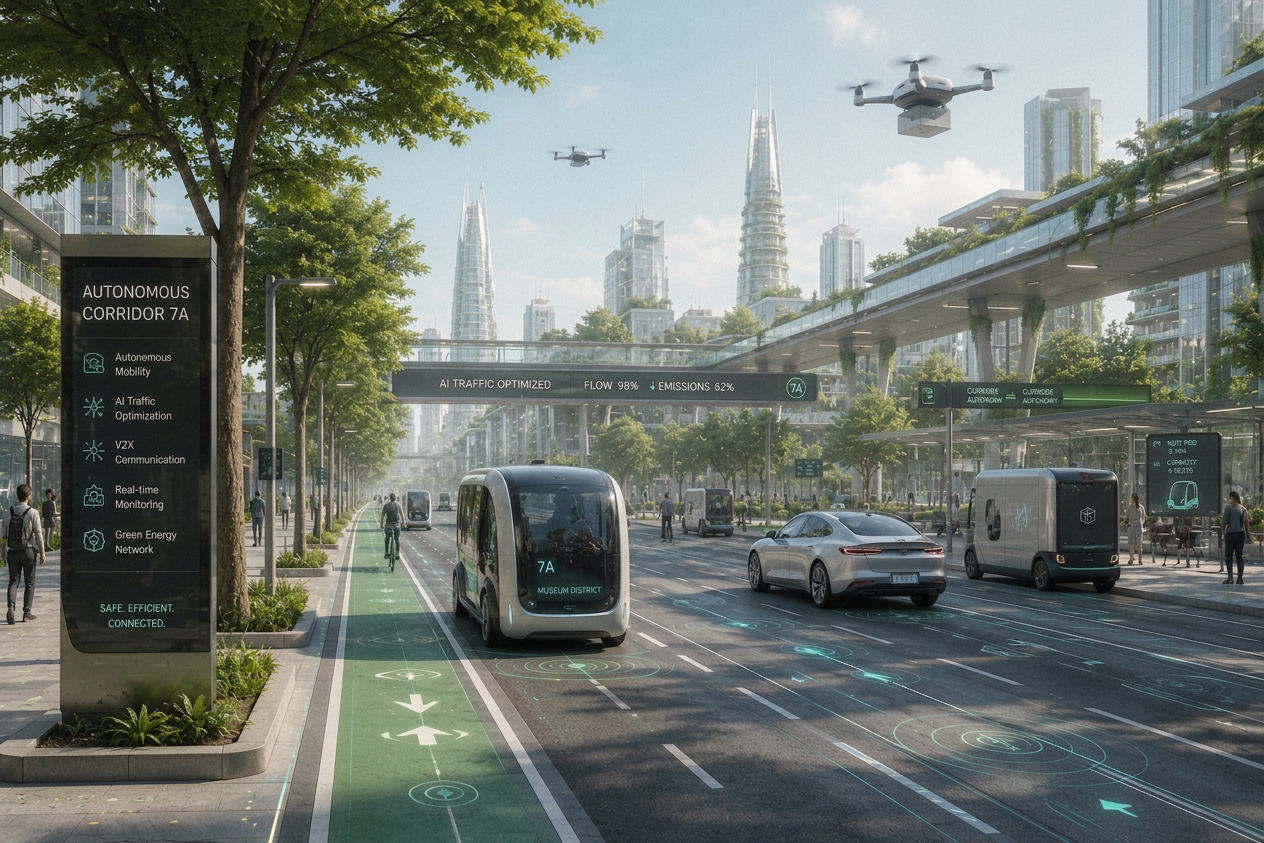
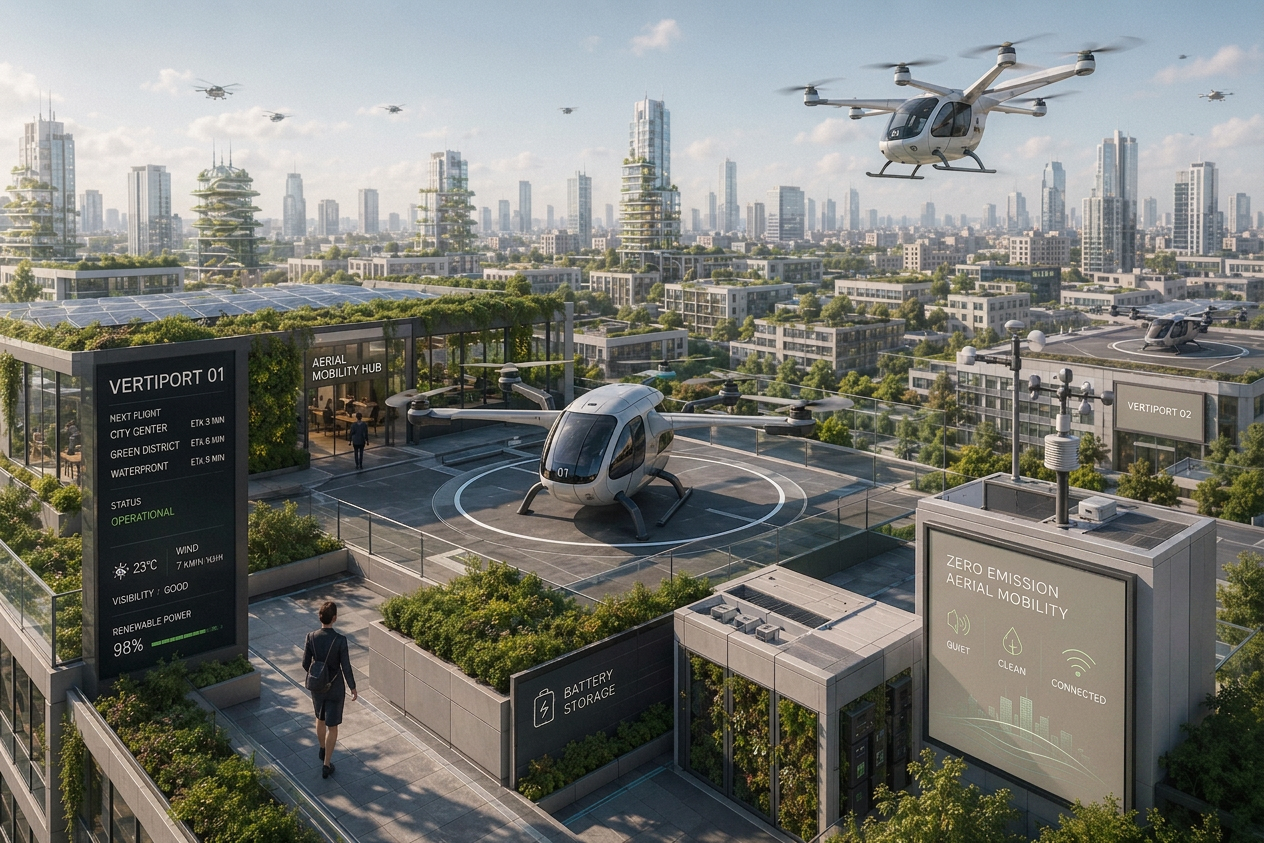
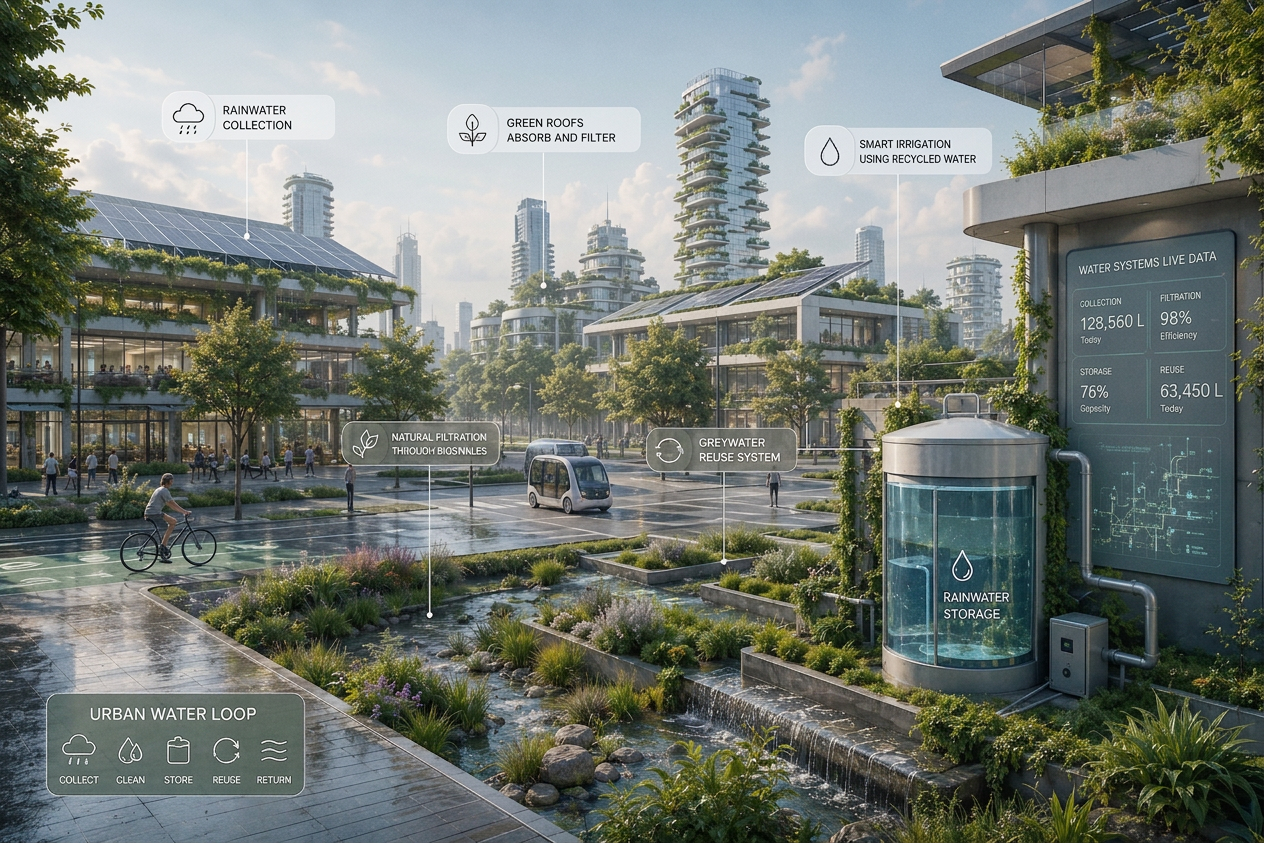
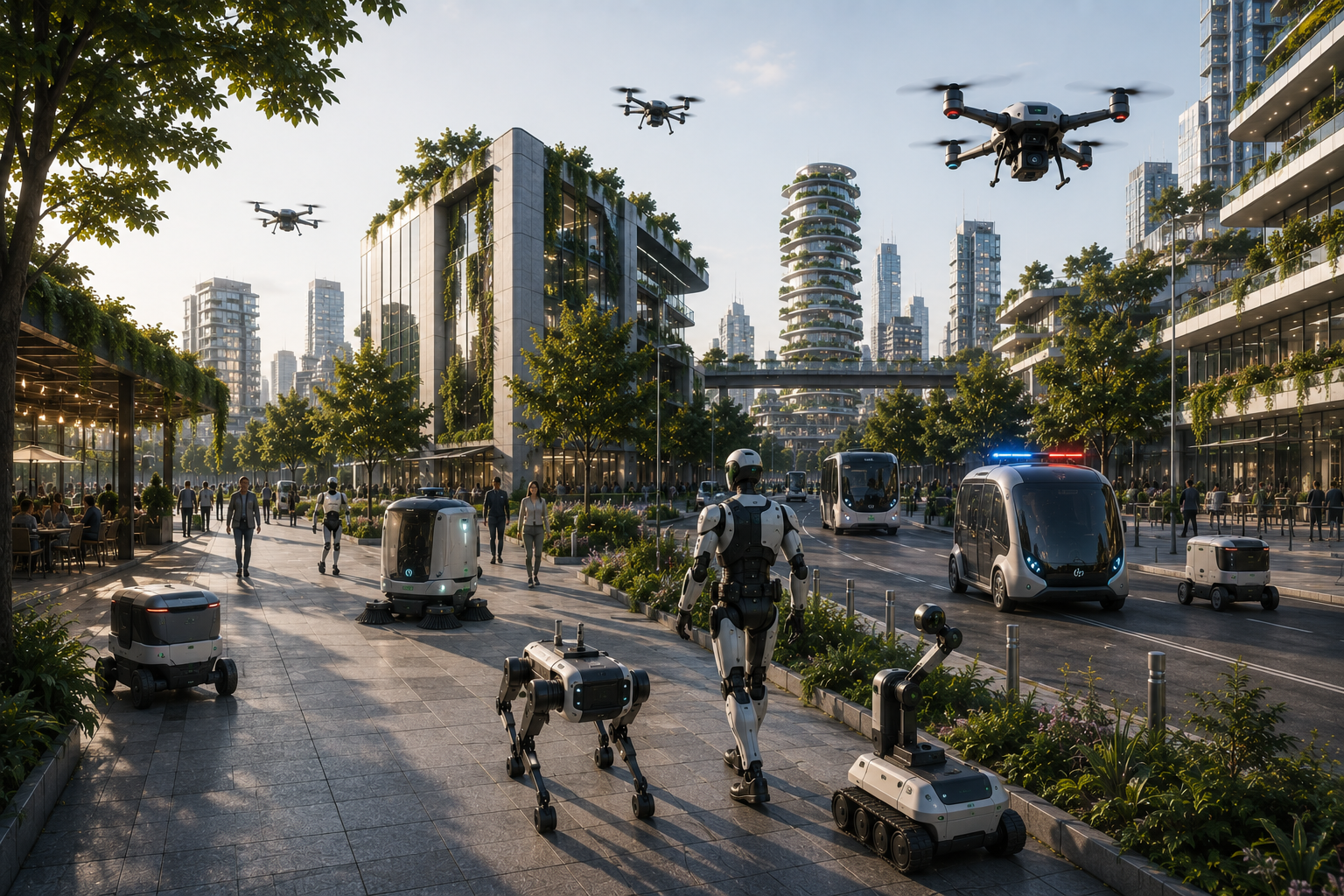
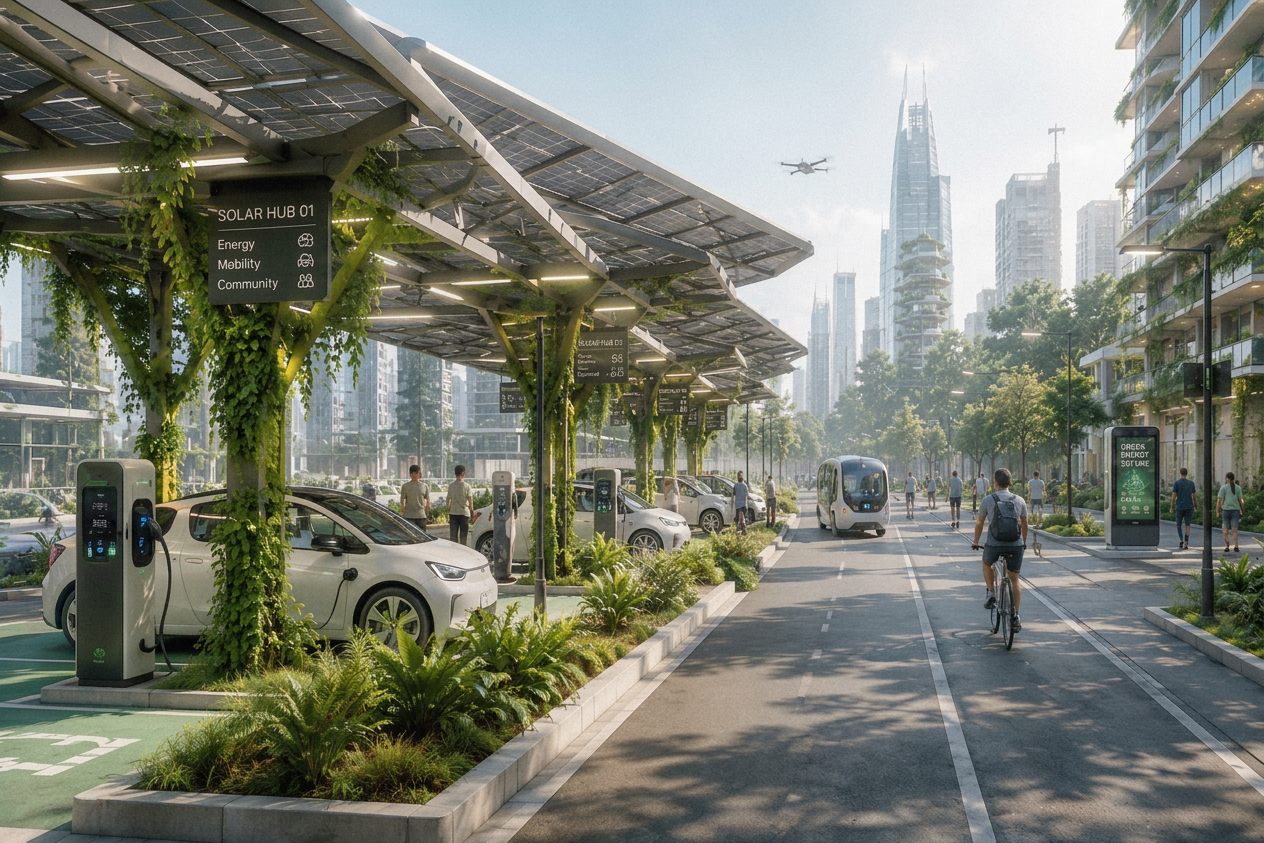
A productive city treats every asset as multifunctional. A parking lot generates electricity and shelters an autonomous fleet. A rooftop cools the building, grows food and feeds the grid. A street manages water, hosts micromobility and coordinates with the corridor it belongs to. Infrastructure stops being passive and starts to compound value.
The six concepts below are the layers we research, document and connect. Each one is technically mature today. Together they form the operating system of an energy-positive, climate-adaptive, human-centred city.
THE SIX CONCEPTS
Layers of a productive city