The two-ton problem
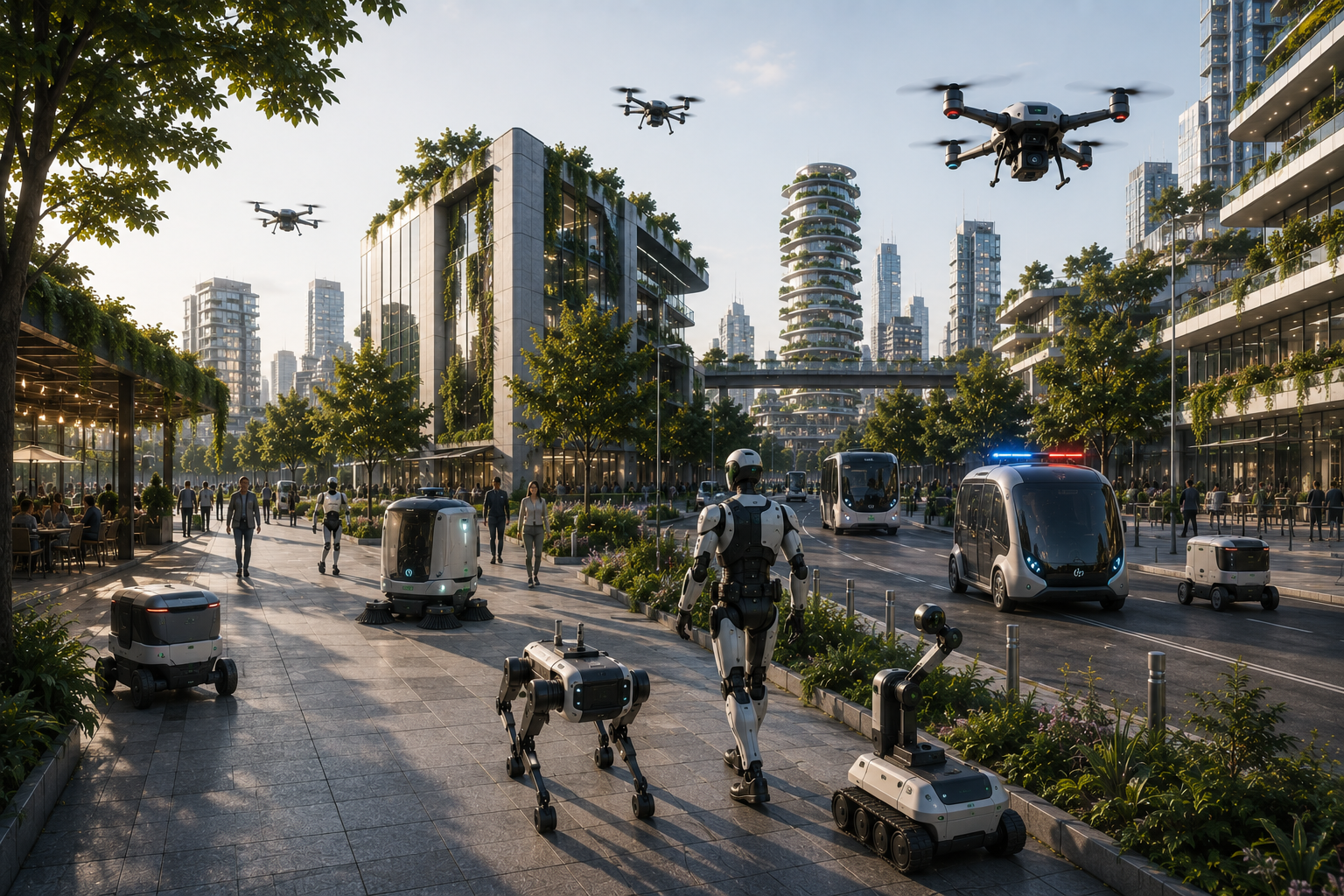
Last-mile delivery has long relied on a quiet absurdity: using a two-ton car to move a two-pound meal. Each trip adds congestion, emissions and cost to the densest, most contested space in any city — the curb and the street. Sidewalk delivery robots attack exactly this mismatch.
From pilot to fleet
The category crossed a real threshold in 2025. Serve Robotics — spun out of Uber in 2021 — announced it had deployed more than 2,000 delivery robots, building what it calls the largest sidewalk delivery fleet in the US, a twentyfold fleet expansion in a single year across Los Angeles, Atlanta, Dallas-Fort Worth, Miami, Chicago and beyond. Its robots run at Level 4 autonomy with a reported 99.8% completion rate and zero tailpipe emissions, each one replacing a car trip. Starship Technologies, the category's volume leader, surpassed 8 million autonomous deliveries in 2025 across 100-plus service areas in the US, UK and EU.
Using a two-ton car to move a two-pound meal is the inefficiency the quiet fleet exists to kill.
The economics and the friction
Analysts size the global delivery-robot market at roughly $796 million in 2025, rising to about $3.24 billion by 2030 — a ~32% compound annual growth rate, though estimates vary widely by definition. The appeal is structural: 24/7 operation, electric drivetrains, and better unit economics than human couriers for short hops. But the friction is equally structural. Robots must negotiate pedestrians, pets, street repairs and accessibility needs — and at least one city, Toronto, banned them from sidewalks and bike lanes in 2021 after disability-advocacy concerns.
Why this is an infrastructure story, not a gadget story
The sidewalk robot is not really a product — it is a claim on public space. Whether it earns that claim depends on planning: clear right-of-way rules, accessibility safeguards, and curb and sidewalk design that treats robots as one more legitimate user rather than an intrusion. The technology is ready; the governance is the open question.
What it means for 2040
A productive city moves goods without moving tons of metal to do it. The quiet fleet points the way: electrify the last mile, shrink the vehicle to the size of the task, and design the public realm to absorb autonomous logistics gracefully. The winners will be the cities that write the rules early, before the fleets write them by default.
References
- 1.Serve Robotics — 2,000 Autonomous Delivery Robots milestone (press release)
- 2.NVIDIA — Serve Robotics Autonomous Sidewalk Delivery case study
- 3.Robotics & Automation News — Last-mile delivery robots: market size and deployments
- 4.Policy Options (IRPP) — Cities need to get ahead of autonomous delivery robots