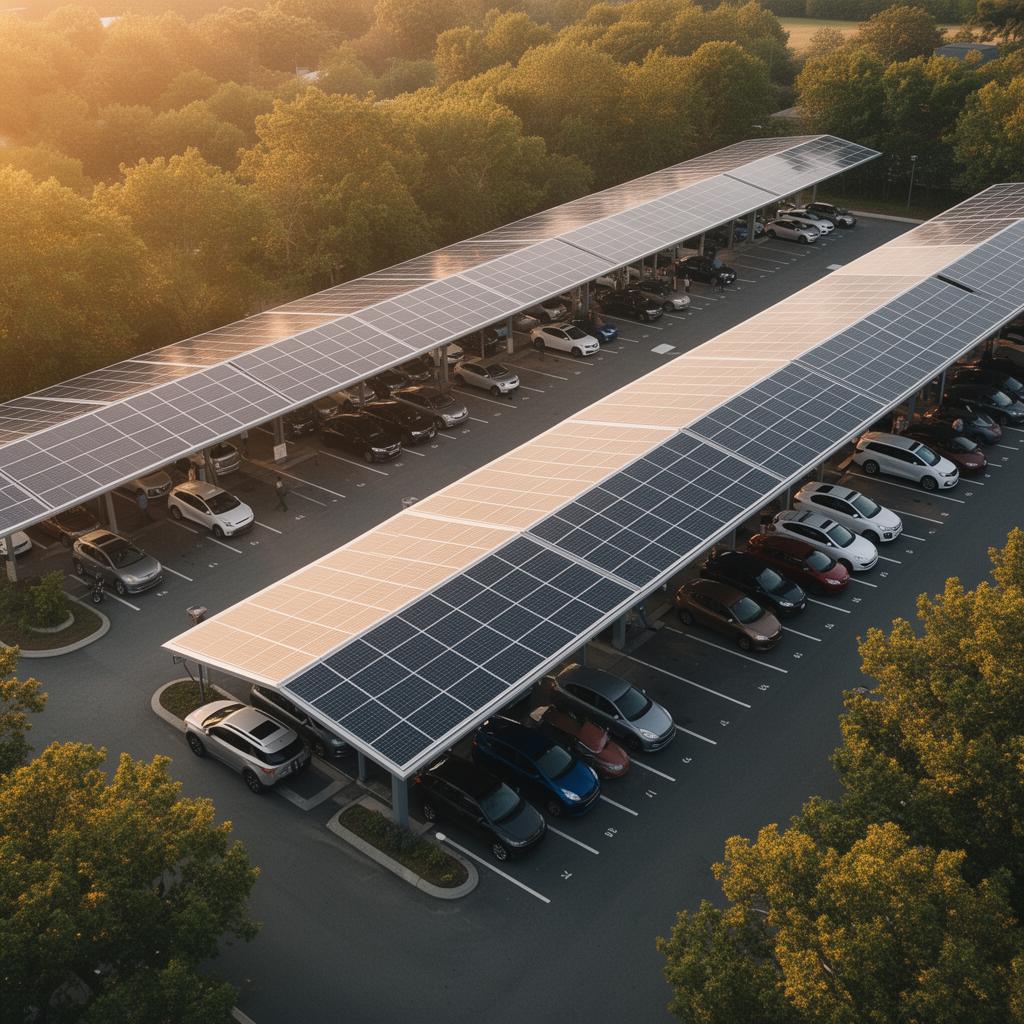
What Parkinglot Category does
Parkinglot Category transforms surface parking into productive infrastructure. It combines three layers: a software origination engine that finds and models viable sites, a proprietary solar carport hardware system, and a Carport-as-a-Service financing model so property owners can host the system at little or no upfront cost. The result turns a flat, single-purpose asphalt field into an asset that produces electricity, shelters vehicles, and manages water — all at once. See the live product at parkinglot.pw.
The dual-use insight
Here is the uncomfortable truth about modern cities: the land is already used up. We have already paved enormous areas for parking — and then asked that land to do exactly one low-value job: store stationary cars under open sky. The productive-city move is not to find new land. It is to make the land we have already sealed do several jobs at once. A solar carport is the cleanest example of dual-use infrastructure there is — the same square metre simultaneously parks a car, generates power, and shades the surface beneath it.
We don't need more land. We need the land we've already paved to do more than one job.
The only realistic answer to urban heat
Parking lots are among the worst contributors to the urban heat island effect — vast, dark, impervious surfaces that absorb solar radiation all day and radiate it back at night. In the United States the heat island effect already pushes urban daytime temperatures roughly 1–7°F higher than surrounding areas, and across 93 European cities heat islands are associated with thousands of premature deaths each year. You cannot un-build a city to fix this. What you can do is shade and de-power the worst surfaces. A carport canopy over a parking lot does exactly that — it intercepts the solar load before it ever hits the asphalt, turning the heat-island's worst offender into a shaded, energy-producing surface. For the densest, most paved parts of a city, canopy-based dual-use is one of the few interventions that is both fast and structurally effective.
Energy resilience and water, on infrastructure you already own
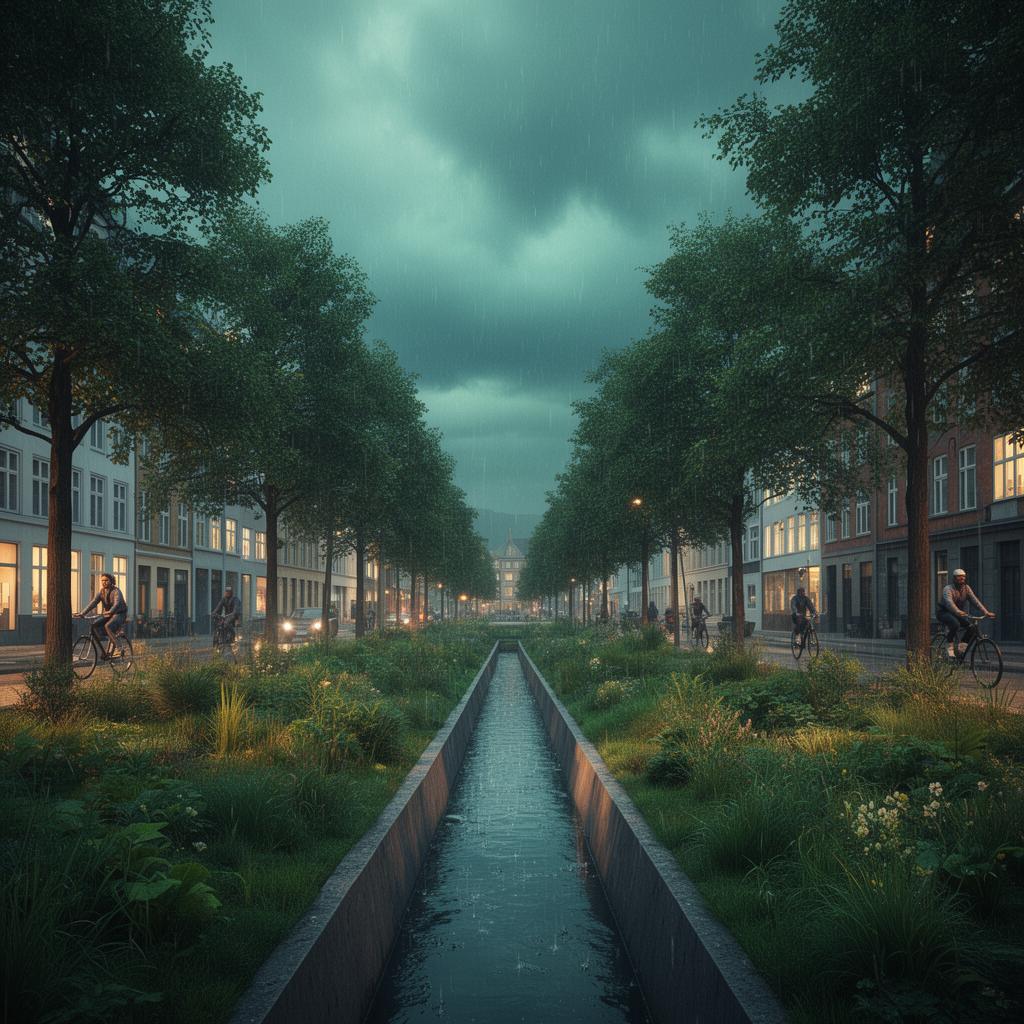
Because the system sits on existing parking, it can be paired with battery storage and EV charging to create a local node of energy resilience — distributed generation exactly where demand (and parked EVs) already are. The same canopy is a rainwater-capture surface: water that currently sheets off asphalt into overloaded storm drains can instead be collected, slowed and recirculated for irrigation, washing or greywater use. One structure, three returns — power, water, shade — bolted onto infrastructure the city has already paid to build.
Why this is the practical path
The alternative to dual-use is the expensive path: dig up the ground, take new land, pour new concrete, and run a fresh round of permitting and disruption for every single improvement. Dual-use refuses that waste. It treats the existing built environment as the substrate to upgrade, not demolish. That is cheaper, faster, lower-carbon, and far less disruptive — and it is exactly the logic the productive city runs on.